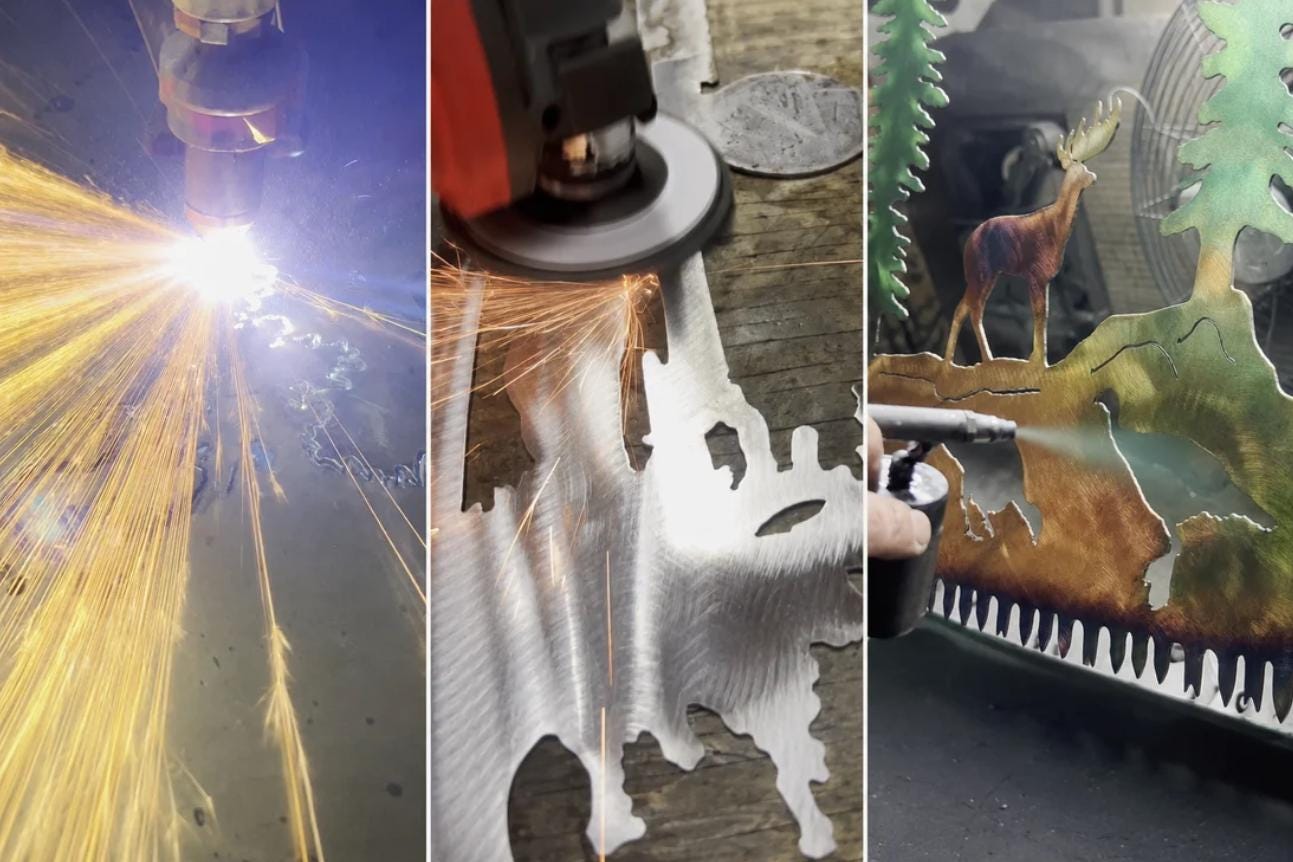
There is quite a bit that happens between a plain sheet of steel and a finished piece of metal art hanging on someone's wall. At Back 40 Metal Worx, our metal art is made in our North Carolina shop. From preparing the artwork for cutting to applying the final finish, each piece passes through our hands several times before it is packaged and shipped to its new home. CNC equipment plays an important role in what we do, but the machine is only one part of the process. Designing, preparing, cleaning, finishing and inspecting the artwork still require plenty of hands-on work. Here's a look inside our shop at how we turn an ordinary sheet of steel into finished metal art.
Every Piece Begins With a Design
Before the plasma cutter ever strikes an arc, we have to turn an idea into a design that can actually be cut from steel. Some designs begin as ideas for our own collection. Custom projects can begin very differently. Over the years, customers have brought us photographs, business logos, sketches and other ideas that they would like to see turned into metal. A design that looks good on paper or on a computer screen doesn't automatically work as plasma-cut artwork. Everything that needs to remain in the finished piece must stay connected after the surrounding steel is removed. Tiny openings, narrow bridges and extremely fine details may need to be changed so the finished piece is both attractive and strong. The goal is to preserve the character of the original idea while creating something that works well in steel. For custom work, we also provide a design for the customer to review before we begin cutting. Sometimes getting from the original idea to the final design takes a few revisions, but we'd rather make those changes on a computer screen than after we've cut the steel.
Preparing the Steel
Most of our wall art is made from 14-gauge steel. We've found that it provides a good combination of strength and durability without making a typical wall piece unnecessarily heavy. Once a design is ready, we determine its placement on the sheet and, when possible, arrange our cutting to make efficient use of the material. Steel that ends up as the open portion of a design is still material we had to purchase. Good layout and thoughtful design help reduce waste while maintaining the size, proportions and appearance we want in the finished artwork.
Cutting the Design With CNC Plasma
Next, the design moves to our CNC plasma table. The plasma torch uses an extremely hot stream of ionized gas to cut through the steel. The CNC system moves that torch along the paths we've created in the digital design, producing both the outside shape and the interior details. It is an impressive process to watch, but it isn't quite a matter of pushing a button and walking away. Steel thickness, cutting speed, kerf width, consumable condition and the amount of heat being introduced into the material can all affect the cut. Small details and narrow openings require particular attention. Experience with the equipment makes a difference. The computer controls where the torch travels, but a person still has to give it the right instructions and make sure the cutting process is producing the result we want.
Want to see the process in action? Here’s a look at raw steel being turned into finished wildlife metal art in our shop.
The Work Isn't Finished When the Cutting Stops
A piece coming straight from the plasma table isn't ready to ship. After cutting, we remove the artwork from the sheet and begin the cleanup process. Slag left from cutting is removed, edges are checked, and areas that need additional smoothing or attention are finished by hand. We also inspect the smaller details of the design at this stage. This is one of those parts of the process customers don't necessarily see when looking at the finished product. The plasma table may create the basic shape, but there is still hands-on work required to turn that freshly cut steel into something we're comfortable putting the Back 40 name on.
Adding the Finish
This is where a piece really begins to develop its personality. Depending on the design and the customer's selection, we use either solid-color finishes or hand-applied patina finishes. Our patina pieces are individually finished, allowing the steel to develop combinations of copper, bronze, blue, auburn and other tones. The coloration isn't simply an image printed onto the metal. Because the process develops differently from one piece of steel to another, there will naturally be variations between finished pieces. That's part of what we like about the process. A customer's piece should resemble the examples we show, but a hand-finished patina means no two pieces are going to be absolutely identical. For designs where a simpler look works better, solid colors provide a clean finish that can fit everything from a garage or hunting cabin to farmhouse, traditional or modern décor.
Powder Coated for Durability
Once we've achieved the appearance we want, the artwork receives its protective powder-coated finish. Our patina pieces are covered with clear powder coat so the colors and natural appearance of the steel remain visible underneath. Solid-color pieces receive the selected colored powder coat. Powder coating provides a considerably tougher finish than ordinary spray paint and allows our metal art to be displayed indoors or outdoors. As with most outdoor décor, protecting a piece from constant exposure to severe weather and direct sunlight can help keep it looking its best for even longer.
One Last Look Before It Leaves the Shop
Before we package an order, we give it another inspection. We verify the size and finish and, on personalized pieces, make sure the customization matches the order. Only then is it ready for packaging. Steel may be tough, but shipping companies can apparently view a package as a personal challenge. 😂 So we take packaging seriously, too. Our goal is for the artwork to reach its destination looking the same way it did when it left our shop.
Handmade Metal Art From North Carolina
Back 40 Metal Worx isn't a label we put on imported, mass-produced metal décor. Our pieces are designed, plasma cut, cleaned, finished, powder coated, inspected and packaged through our own shop here in North Carolina. We've been working with metal for a long time, and modern CNC equipment has certainly changed what we're able to create. But the equipment hasn't eliminated the craftsmanship involved. It has simply become another tool in the shop.
Whether we're making wildlife metal art for a cabin, a personalized sign for someone's garage, décor for a home, or a completely custom design based on a customer's idea, the process still begins the same way: With a plain piece of steel.
What happens after that is what turns it into Back 40 metal art.
Want to see more from our shop? Visit the Back 40 Metal Worx website for more metal art, shop news, and a closer look at what we're making